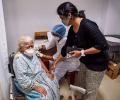
Kejriwal said COVID-19 vaccines should have one price and appealed to the Centre to bring down the price.

According to sources, around 10 crore doses of the Sputnik V vaccine is likely to be imported for emergency use in the country in the next six to seven months.
While the vaccine could be available at $3-6 (Rs 225 to Rs 550) per dose, herd immunity might be two years away due to implementation challenges, it said, adding the experience in large scale adult vaccination programmes is thin.
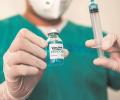
The novel mRNA vaccine candidate, HGCO19, is supported with seed grant under the Ind-CEPI mission of the Department of Biotechnology. The mRNA vaccines do not use the conventional model to produce immune response. Instead, they carry molecular instructions to make the protein in the body through a synthetic RNA of the virus.

Choubey said till February 4 total 81 AEFIs, which is 0.096 per cent of the total beneficiaries who have been administered Covaxin, have been reported.
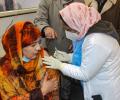
The second dose of anti-coronavirus vaccine will be administered to healthcare workers from February 13, the Centre said on Thursday, highlighting that 45 per cent of them have been inoculated so far.
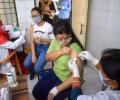
As states grapple with a shortage of coronavirus vaccines, the Centre on Thursday said that over two billion doses will be made available in the country in five months between August and December, enough to vaccinate the entire population.
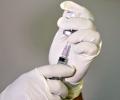
In a letter to all states and Union territories, the ministry highlighted that under the emergency use authorisation, coronavirus vaccination is indicated only for 18 years and above. If required, COVID-19 vaccine and other vaccines should be separated by an interval of at least 14 days.

An important focus of the dry run will be on management of any possible adverse events following immunisation.

Vardhan noted that COVID-19 infection among those vaccinated would be very mild and not progress to an advanced stage.

A total of 3,006 session sites across all states and union territories will be virtually connected during the launch at 10.30 am by Prime Minister Narendra Modi and around 100 beneficiaries will be vaccinated at each session site.

The Oxford vaccine, which also has a tie-up with the Serum Institute of India, was first administered to Brian Pinker, an 82-year-old Oxford-born dialysis patient. Pinker is among the first to be vaccinated by the Oxford University Hospital's (OUH) chief nurse, hailed as a major milestone in the phased vaccination programme being undertaken by the National Health Service (NHS).
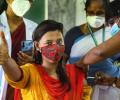
Prime Minister Narendra Modi's announcement of providing free inoculation to all adults will entail total spending of anywhere between Rs 45,000 crore and Rs 50,000 crore. This is higher than Rs 35,000 crore that the government had budgeted.
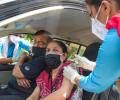
"The concrete actions are a stern indication that Government of India is making all out efforts to increase vaccine production in the country as well as attracting foreign vaccine manufacturers to supply the required vaccine doses for national Covid vaccination programme," the ministry in a statement.
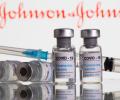
According to the sources, there are limited prospects of J&J exporting its vaccine from the US to other countries in the near future and the "entire production" at the BE facilities in India, beginning July/August, will be handed over to the pharma giant under a contract between the companies.

The Central Drugs Standard Control Organisation has granted restricted emergency use authorisation to two new vaccines and a drug for COVID-19, taking the number of preventives and treatments available in India to 12.
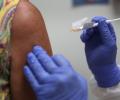
Vaccinating all citizens above the age of 18 years against COVID-19 will cost Rs 67,193 crore, of which states together will incur Rs 46,323 crore, India Ratings and Research (Ind-Ra) said on Thursday. As the second wave of COVID-19 sweeps the country with alarming speed and severity, the government has announced a liberalised and accelerated Phase 3 strategy of COVID-19 vaccination. Under this scheme, all persons above 18 years of age will be eligible to get COVID-19 vaccine doses from May 1.

In a tweet, Prime Minister Narendra Modi said India is deeply honoured to be a 'long-trusted' partner in meeting the healthcare needs of the global community and that supplies of the vaccines to several countries will commence on Wednesday, and more will follow in the days ahead.

Out of the 447 adverse events following immunisation, only 3 required hospitalisation.

Sputnik V is the third vaccine India has given the go-ahead to after 'Covishield', developed by Oxford University and AstraZeneca and 'Covaxin', the indigenous vaccine manufactured by Bharat Biotech. Covishield is manufactured by the Serum Institute of India.

As India launches the world's most ambitious and biggest vaccination drive against COVID-19, the country will encounter the formidable challenge of rapidly scaling up distribution of the vaccines to secure immunity for its entire population, two prominent Indian scientists at World Health Organisation have said.

Easing restrictions, all private hospitals were on Tuesday allowed to give the vaccines if they adhere to the laid down norms, while the 9 am to 5 pm timing was also done away with.
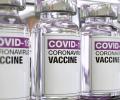
By 2022, there is a plan to make an mRNA-technology vaccine, for which it has tied up with Canadian firm Providence Therapeutics.

The government is considering setting up air freight stations to enable direct movement of vaccines from pharmaceutical factories to the aircraft.

India's willingness to play a big role in the manufacturing and to allow some of those vaccines to go to other developing countries will be an absolutely critical part of containing the pandemic, said Gates.

India has purchased 500 million doses of the Oxford University-AstraZeneca vaccine candidate, one billion from the United States company Novavax and 100 million doses of the Sputnik V candidate from Russia's Gamaleya Research Institute, according to the US-based Duke University Global Health Innovation Center.
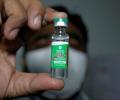
Those who have recovered from COVID-19 respond faster to the Covishield vaccine and reach high antibody levels, says a study, leading to hopes that they may not need a second dose and therefore help widen India's corona immunisation cover.
The first 100 beneficiaries of such foreign vaccines shall be assessed for seven days for safety outcomes before it is rolled out for further immunisation programme within the country, the Union health ministry said.

Behind each Covid vaccine are hundreds of parents, who had the courage and conviction to come forth with their children for the trial of a vaccine which was, until then, untried in that age group, reports Sindhu Bhattacharya.

The health ID will contain information about medical data, prescriptions and diagnostic reports and summaries of previous discharge from hospitals for ailments. The mission is expected to bring efficiency and transparency in healthcare services in the country.

Union Health Minister Harsh Vardhan on Friday said the COVID-19 vaccination drive will be extended in the coming days and asserted that there should not be any misconceptions about the two Indian vaccines being administered in the country.
Modi is also likely to launch the Co-WIN (COVID Vaccine Intelligence Network) App, a digital platform created for real-time monitoring of COVID-19 vaccine delivery and distribution.
'This government did not have any plan for safety stocks of essential medicines.'

Five vaccine candidates are in advanced stages of development in India, out of which four are in Phase II/III and one is in Phase-I/II trials.

Modi urged the country to show patience during the vaccination drive as it had shown till now in fighting the pandemic.

'Whenever you roll out: effectiveness is important, operational logistics are important, side effects are important and vaccine hesitancy is important.'

This will boost availability of these items as well as make them cheaper, it said, adding that Modi also directed the revenue department to ensure seamless and quick custom clearance of such equipment.
The government is hopeful of a speedy launch of single-dose COVID-19 vaccine Sputnik Light in India and all stakeholders, including the Russian manufacturer and its Indian partners, have been directed to fast-track the application and regulatory approval procedures for the jab to boost the country's vaccination drive, sources said.
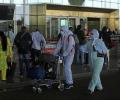
British nationals arriving in India, irrespective of their vaccination status, will have to undergo 10 days of mandatory quarantine from October 4 as part of the reciprocal actions initiated by the government following the vaccine certification row between the two countries.

Millions of people across the country stayed indoors on March 22, 2020 in an unprecedented and overwhelming response to Prime Minister Narendra Modi's appeal for the nationwide curfew. People used to come out briefly at 5 pm to show their gratitude to healthcare and other essential service providers with sounds of bells, conches and claps.
 © 2026 Rediff.com - Advertise with us - Disclaimer - Privacy Policy - Sitemap - Feedback - About us - Terms of use - Grievances